
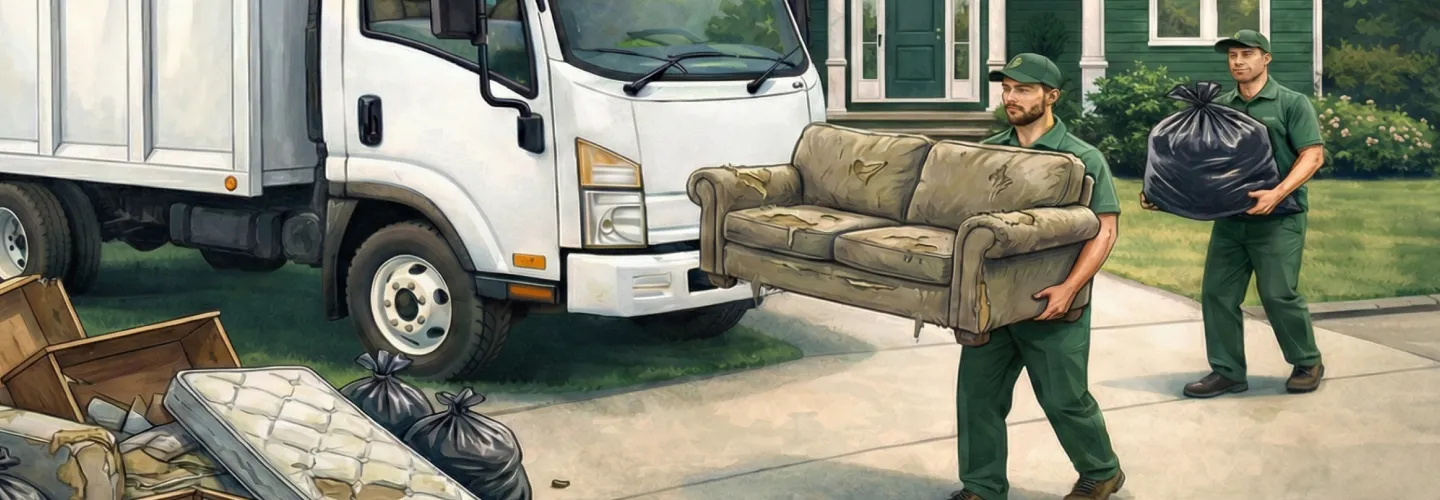
Cartersville Shed Removal Services
Choose our shed removal service for reliable, efficient, and affordable solutions—our experienced team handles everything from dismantling to cleanup, making it easy to reclaim your outdoor space without the stress.
Get a Free QuoteOur Cartersville Junk Removal Services
Shed Removal in Cartersville, GA – Local Service Guide
Shed removal in Cartersville, GA is often needed during home upgrades, storm recovery, or when replacing aging outbuildings. In neighborhoods like Cassville and Sugar Valley, residents typically schedule shed removal in spring or fall, when weather is mild and yard projects are underway. Many sheds in Cartersville are used for storing lawn equipment or seasonal items, and their removal can free up valuable space or prepare a property for new construction. Local disposal options include recycling metal components or donating usable materials, but most sheds require careful dismantling and hauling due to their size and access challenges—especially in areas with narrow driveways or dense tree coverage. Always check local guidelines for permits and disposal, as Cartersville has specific rules for structure removal. For more on local requirements, visit the Cartersville Public Works Department.
Key Considerations for Shed Removal in Cartersville
- Timing projects around spring/fall for best weather and scheduling
- Checking if a permit is needed for demolition or disposal
- Using approved disposal or recycling channels for shed materials
- Ensuring access for removal crews in tight or tree-covered lots
- Estimating shed size and volume for accurate hauling quotes
- Coordinating with local services for safe, compliant removal
Benefits of Shed Removal in Cartersville
Fast Shed Removal Services
Eco-Friendly Disposal
Licensed and Insured Team
No Hidden Fees
Flexible Scheduling Options
Safe and Efficient Process
Coordinating Shed Removal Permits and Inspections with Cartersville's Building Department
Shed removal in Cartersville typically requires coordination with the city's Building Department before demolition begins. Depending on the shed's size, construction materials, and location on the property, a demolition permit may be necessary. Residents should verify whether their shed falls under structures requiring formal permitting, particularly if the shed has electrical wiring, plumbing connections, or a concrete foundation.
Key steps for permit coordination include:
- Confirm permit requirements by contacting the Building Department before beginning any demolition work
- Submit a permit application with details about the structure's size, materials, and location on the lot
- Schedule inspections if the shed has utility connections that must be properly disconnected
- Verify zoning compliance to ensure removal does not conflict with any site plan or land use conditions
- Obtain written approval before hiring contractors or beginning self-demolition
Failure to obtain required permits may result in code enforcement action or fines.
Cartersville Building Department
10 North Public Square, Cartersville, GA 30120
Phone: (770) 387-4683
Official Website: Cartersville Building Department
Disposing of Shed Demolition Debris Through Cartersville's Public Works Programs
Once a shed has been dismantled, proper disposal of the resulting debris is essential. Cartersville's Public Works Department oversees sanitation support and waste management coordination for residential properties. Shed demolition generates a variety of materials—including wood framing, roofing shingles, metal fasteners, vinyl siding, and concrete footings—each of which may have different disposal requirements.
Residents should be aware of the following disposal considerations:
- Lumber and wood debris should be separated from other materials; untreated wood may be accepted at regional landfills or recycling facilities
- Asphalt shingles are often accepted at construction and demolition (C&D) debris facilities but may be prohibited from standard residential waste collection
- Metal components such as hinges, screws, brackets, and roofing panels can often be recycled through scrap metal facilities
- Concrete and masonry from foundations or flooring may require separate hauling to a C&D landfill or recycling processor
- Bulk debris exceeding standard curbside collection limits must be transported to an approved disposal facility
Contact the Public Works Department to confirm current collection schedules and any volume limitations for residential debris pickup.
Cartersville Public Works Department
10 North Public Square, Cartersville, GA 30120
Phone: (770) 387-4683
Official Website: Cartersville Public Works Department
Georgia's Solid Waste Management Act and Shed Demolition Compliance Requirements
Shed removal projects in Cartersville must comply with Georgia's statewide solid waste regulations administered by the Georgia Environmental Protection Division (GA EPD). The Georgia Comprehensive Solid Waste Management Act establishes the regulatory framework governing how construction and demolition debris must be handled, transported, and disposed of throughout the state.
Important state-level requirements for shed demolition debris include:
- Construction and demolition (C&D) waste must be disposed of at facilities permitted by GA EPD; illegal dumping carries significant penalties
- Asbestos-containing materials found in older sheds (pre-1980 construction) require testing and, if present, licensed abatement before demolition per EPA regulations
- Lead-based paint on sheds built before 1978 must be handled in accordance with the EPA Renovation, Repair, and Painting Rule
- Hazardous materials such as stored pesticides, paints, solvents, or fuel containers found inside sheds are prohibited from landfill disposal and must be taken to a household hazardous waste collection event
- Waste haulers transporting C&D debris commercially must hold appropriate state permits and deliver loads to GA EPD-permitted facilities
Bartow County's Environmental Management Services also provides oversight for erosion control and stormwater protection during demolition activities.
Bartow County Environmental Management Services
Official Website: Bartow County Environmental Management Services
Recycling and Salvaging Materials from Shed Demolition Projects in Cartersville
Before demolishing a shed, Cartersville residents should evaluate which materials can be recycled, salvaged, or donated to reduce landfill waste. Many shed components retain value and can be diverted from disposal through proper sorting and separation at the project site.
Recyclable and salvageable materials commonly found in shed demolition include:
- Scrap metal — aluminum siding, steel roofing panels, copper wiring, and iron hardware can be taken to local scrap metal recyclers
- Dimensional lumber — untreated, unpainted wood framing in good condition may be accepted by salvage organizations or reuse centers such as Habitat for Humanity ReStore locations
- Windows and doors — functional windows, doors, and frames can be donated for reuse in other construction projects
- Concrete and brick — clean masonry materials may be accepted by C&D recycling processors for crushing and reuse as aggregate
- Roofing materials — asphalt shingles are recyclable at specialized facilities that process them into road paving material
Pressure-treated lumber, which is common in shed construction, contains chemical preservatives and should not be burned or composted. This material must be disposed of at a permitted landfill. Residents should separate treated wood from untreated wood during demolition to ensure proper handling of each material type.
Safety Protocols and Hazard Assessment for Shed Demolition in Cartersville
Shed removal involves structural demolition that presents safety hazards requiring careful planning and appropriate precautions. Cartersville residents undertaking shed removal—whether independently or through a contractor—should conduct a thorough hazard assessment before beginning work.
Critical safety considerations include:
- Structural stability — assess whether the shed is leaning, rotting, or otherwise compromised before entering or beginning demolition; unstable structures may collapse unexpectedly
- Electrical disconnection — sheds with electrical service must have power disconnected at the breaker panel by a licensed electrician before demolition begins
- Asbestos and lead paint — sheds constructed before 1980 may contain asbestos in roofing, siding, or insulation; pre-1978 structures may have lead-based paint requiring testing
- Pest infestations — abandoned sheds may harbor wasps, rodents, snakes, or other wildlife; inspect thoroughly before demolition
- Personal protective equipment (PPE) — workers should wear hard hats, safety glasses, heavy gloves, steel-toed boots, and dust masks at minimum
- OSHA compliance — commercial contractors performing shed demolition must follow OSHA construction safety standards including fall protection and tool safety requirements
The Cartersville Fire Department should be consulted if the shed contains propane tanks, fuel containers, or other flammable materials that require safe removal before demolition.
What Neighborhoods Do We Serve Throughout Cartersville, GA?
- Downtown Cartersville: Properties in the historic downtown core may be subject to additional review through the Cartersville Planning & Development department. Older sheds in this area may contain lead paint or asbestos materials requiring professional assessment before demolition.
- West End: This established residential neighborhood features older single-family homes with backyard sheds that may have deteriorated over decades. Narrow lot configurations and mature tree canopy can limit equipment access for removal crews.
- Grassdale Area: Larger residential lots in this area often include sizable storage sheds and outbuildings. Wide driveways and open yard access generally accommodate demolition equipment and debris hauling vehicles without difficulty.
- Peeples Valley: A mix of residential properties with varying lot sizes where aging sheds are common. Proximity to waterways may require stormwater protection measures during demolition per Bartow County environmental regulations.
- Douthit Ferry Road Corridor: Properties along this corridor feature a mix of older and newer construction. Shed removal projects here should account for potential utility easements and setback requirements that may affect demolition planning.
- Pine Grove Area: Suburban residential properties with standard lot sizes and typical backyard shed configurations. Street access is generally favorable for removal vehicles, though cul-de-sac locations may require advance planning for truck maneuvering.